
Quick Answer
A duvet insert is the soft inner blanket that fills a duvet cover — the part that provides warmth, usually filled with down, down-alternative, wool or silk, designed to slot into a washable cover. Together the insert + cover system replaces a traditional quilted comforter. The two specs that matter are fill weight (TOG rating) and construction (baffle-box vs sewn-through). For most adults in a temperate climate, a medium-weight insert works year-round. Pair it with a breathable GOTS-certified cover — like Or & Zon's organic cotton and linen duvet covers — for the healthiest, most washable setup.
Key Takeaways
- A duvet insert is the inner blanket that fills a washable duvet cover — the part that provides the warmth.
- Insert + cover replaces a quilted comforter and is far easier to wash and restyle.
- Two specs decide everything: fill weight (TOG rating) and construction (baffle-box vs sewn-through).
- Fill options: down (warmest, lightest), down-alternative (hypoallergenic), wool and silk.
- A medium-weight insert suits most adults year-round in a temperate climate.
- Pair it with a breathable GOTS-certified cover — organic cotton or linen — for the healthiest, most washable setup.
A duvet insert is the soft inner blanket that fills a duvet cover. It's the part that provides the warmth — usually filled with down, down-alternative fibre, wool, or silk — and is designed to be inserted into a separable cover that you can wash regularly. Together, the insert + cover system replaces a traditional quilted comforter.
The two specs that matter when choosing one are fill weight (TOG rating) and construction (baffle box vs sewn-through). For most adults in a temperate climate, a medium-weight insert with baffle-box construction works year-round.
Sizing rule: the cover should be 2–4 inches larger than the insert in each direction. A 90×90" queen insert needs a 92×96" queen cover for proper drape — the slight oversize is what creates the loose, hotel-style loft hotels are famous for.
Researched and reviewed by the Or & Zon product team — drawing on direct relationships with our GOTS-certified Portuguese mill partners, hospitality-procurement specifications, and primary sources on textile fill, TOG rating standards (British Standard BS 5335), and down certification (Responsible Down Standard, Global Traceable Down Standard).
Last updated: May 2026 · Reading time: 12 min
📋 Key Takeaways
- A duvet insert is the fluffy inner blanket that fills a duvet cover. The insert provides the warmth; the cover provides the appearance and washability.
- Together, a duvet insert + duvet cover replaces a traditional quilted comforter — and lets you launder the cover frequently while keeping the same insert for years.
- The two most important specs are fill weight (often described as TOG rating, light/medium/heavy, or summer/all-season/winter) and construction (baffle-box vs sewn-through).
- Fill types ranked by performance: down (warmest-to-weight, lightest, most expensive) → wool (temperature-regulating, machine-washable, hypoallergenic-friendly) → silk (luxurious, hypoallergenic, ideal for hot sleepers) → down-alternative microgel (most washable, allergy-safe, best price-performance).
- Fill power measures down quality — 600–800 fill power is the sweet spot. Below 500 is cheap, above 800 is overkill for most homes.
- TOG ratings: 4.5 TOG = summer, 9–10.5 TOG = all-season, 13.5+ TOG = winter. Most adults need only one all-season insert.
- Sizing: the duvet cover should be 2–4 inches larger than the insert in each direction. The slight oversize creates the loose hotel-style drape.
- Baffle-box construction holds fill uniformly without cold spots; sewn-through is cheaper but creates cold seams.
- For ethical down, look for Responsible Down Standard (RDS) certification — verifies no live-plucking and no force-feeding.
- A good insert lasts 10–15 years. Spot-clean as needed; full wash every 2–3 years. The cover does the laundering work — that's the whole point of the insert + cover system.
1. What a Duvet Insert Actually Is (and Why It's Different from a Comforter)
The duvet insert is the inner blanket — the fluffy, soft layer that provides the actual warmth. It typically lives inside a duvet cover, which acts as a protective and decorative outer shell. The system as a whole replaces what most American households call a comforter, but with one important operational difference: the cover is removable and washable, while the insert (which is harder to launder) stays clean inside it.
The terminology around bedding's top layer is genuinely confusing, especially across regions. Here's the clarifying breakdown:
| Term | What it is | Washable |
|---|---|---|
| Duvet insert | The inner fill blanket (down, down-alternative, wool, silk) | Rarely — every 2–3 years |
| Duvet cover | The removable outer shell that protects and styles the insert | Weekly (along with sheets) |
| Duvet (the British term) | The full insert + cover assembly | Cover yes, insert no |
| Comforter | A single-piece quilted bed-topper with fill sewn permanently between the layers | Whole thing, infrequently |
| Quilt | A thinner, flatter bed-topper with stitched-through layers, often decorative | Yes, more easily |
| Coverlet | A lightweight quilt-style bedspread, used for warmth or styling | Yes |
The insert-plus-cover system is the European standard and the global hotel industry standard, and for good reason: it's more hygienic (cover washes weekly), longer-lasting (the insert isn't subjected to weekly machine abuse), and far easier to refresh aesthetically (swap the cover, keep the insert). For the deeper comparison, see our quilt vs comforter guide and our what is a duvet cover article.
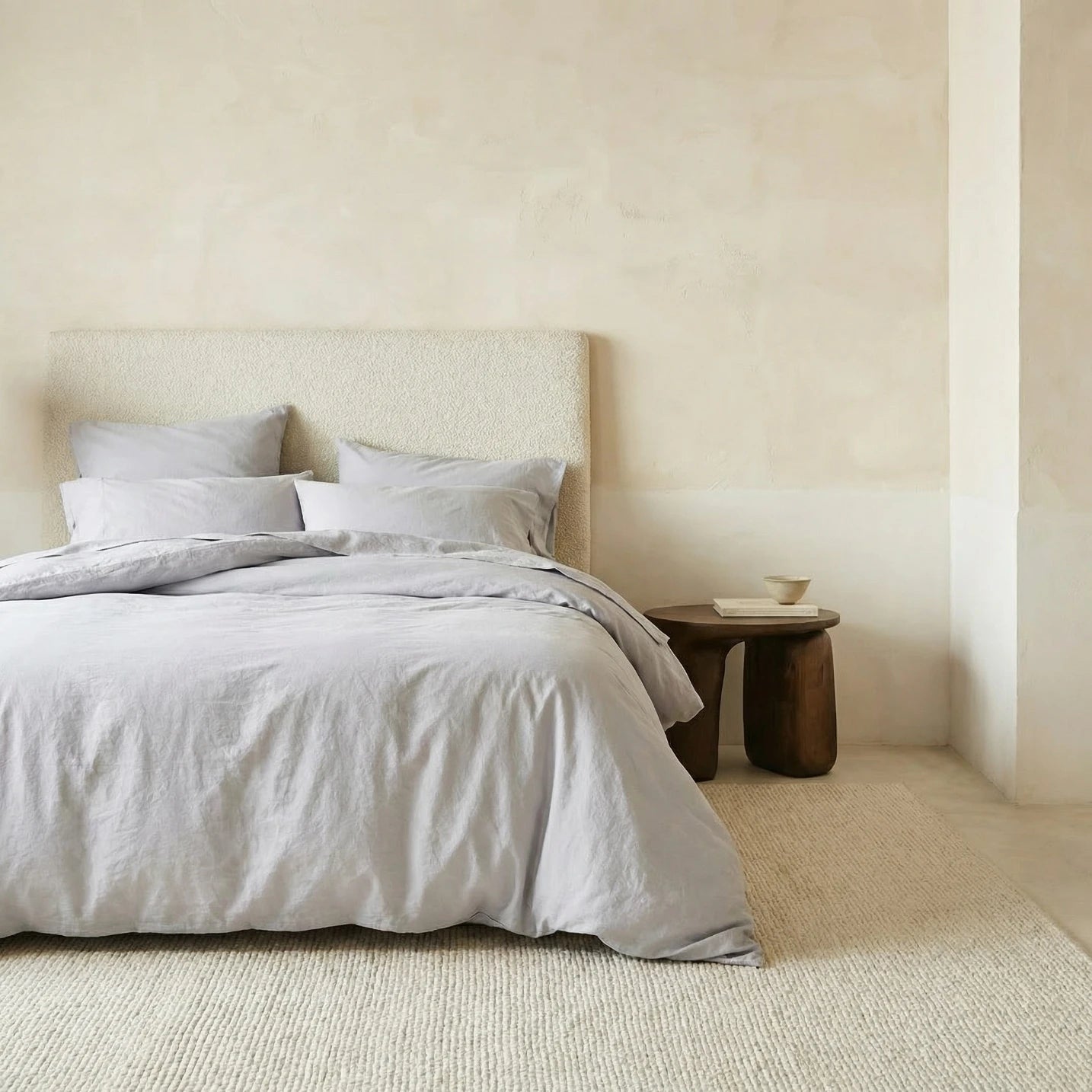
2. Duvet Insert vs Comforter — Which Should You Buy?
This is the most-Googled bedding question, and the answer comes down to your priorities on three trade-offs: laundering convenience, lifespan, and aesthetic flexibility. Here's the honest decision tree:
| Buy a duvet insert + cover if… | Buy a comforter if… |
|---|---|
| You want to launder the outer layer weekly (the hygienic standard hotels follow). | You don't mind washing the entire top layer infrequently. |
| You want to change your bedroom's look seasonally by swapping covers, not buying new comforters. | You want a single decorative bedding piece you don't plan to reconfigure. |
| You want the insert to last 10–15 years (the cover takes the laundering wear, the insert stays protected). | You're fine replacing the entire top layer every 3–5 years. |
| You're investing in high-quality fill (down, wool, silk) and want to protect it. | You're buying a budget option and don't mind compression-fast polyester fill. |
| You want the loose hotel-style drape from a slightly oversized cover. | You prefer a tightly quilted, structured top with stitched-through patterns. |
| You have allergies — the cover protects the insert from dust mite penetration. | Skip — comforters are harder to fully launder for allergen control. |
The honest summary: for most adults treating their bedding as a 10-year purchase, the insert + cover system wins on every dimension except simplicity of the initial buy. Comforters are easier to shop for (you buy one piece, you're done), but the system loses on laundering, lifespan, hygiene, and seasonal flexibility. Hotels use insert + cover for these exact reasons, not for aesthetics.
One caveat for first-time buyers: the comforter-vs-insert decision is also a question of whether you're willing to learn the "burrito method" of cover-changing (covered in Section 9). If you genuinely don't want to deal with the cover-on-insert assembly each laundering cycle, a quilted comforter is the simpler path.
3. The Five Fill Types — Honest Pros and Cons
Most "best duvet insert" lists default to white-goose-down without explaining why. The truth is that no fill is universally best — each has trade-offs that matter more or less depending on your climate, allergies, and ethics. Here's the honest comparison.
| Fill type | Warmth-to-weight | Breathability | Care | Price band |
|---|---|---|---|---|
| Goose down | Highest — lightest, warmest | Excellent | Professional clean every 2–3 years | $$$ ($200–$600) |
| Duck down | High — slightly heavier than goose | Good | Professional clean every 2–3 years | $$ ($120–$350) |
| Wool | Medium — heavier but excellent regulator | Very high (moisture-regulating) | Spot-clean; machine-wash gentle every 1–2 years | $$$ ($200–$500) |
| Silk | Medium — light, drapes flat | Excellent — best for hot sleepers | Professional clean only | $$$$ ($300–$800) |
| Microgel cluster (down-alternative) | Medium-high — close to down with modern fibres | Good | Machine wash on hot — best of any fill | $ ($60–$200) |
| Polyester fibrefill | Low — compresses fast | Poor — traps heat and moisture | Machine wash, but compresses with each cycle | $ ($30–$100) |
For most adult households, the smart choices are down or microgel cluster. Down is the long-term investment (15+ years of use) and the best warmth-to-weight ratio; microgel cluster is the best price-performance and the only fill you can throw in a hot wash when life happens. Wool is the underrated dark horse — particularly good for moisture-regulating sleepers (menopause, night sweats) and naturally dust-mite-resistant.
4. Fill Power Explained — Why It's the Spec That Actually Matters
If you're buying down, the single number worth understanding is fill power. Fill power measures the loft of one ounce of down — how many cubic inches one ounce will occupy when uncompressed. Higher fill power means each ounce of down traps more air, which means more warmth per unit of weight.
| Fill power | Quality tier | Typical use |
|---|---|---|
| 400–500 | Low | Budget duvets; cheap pillows; not recommended for primary use |
| 550–600 | Mid-tier | Decent everyday duvets; budget-conscious buyers |
| 650–750 | Sweet spot | Most adult homes; excellent warmth-to-weight without the premium price |
| 800–850 | Luxury | Premium hotels, cold climates, high-end home use |
| 900+ | Specialty | Ultralight outdoor gear; overkill for most home duvets |
The honest answer is that fill power above 800 is rarely worth the premium for home use — the marginal warmth gain is small and the price jump is significant. A 650–750 fill-power down insert from a trusted brand will outperform a 900 fill-power insert poorly made. Construction, baffle box design, and shell fabric matter as much as the fill-power number.
5. TOG Ratings — What Weight Insert You Actually Need
TOG (Thermal Overall Grade) is the European standard for measuring the warmth of bedding. It's the most useful single number when choosing a duvet insert because it accounts for total insulation, regardless of fill type. A 10.5 TOG wool duvet, a 10.5 TOG down duvet, and a 10.5 TOG microgel duvet all provide roughly the same warmth — the trade-offs are about weight, breathability, and care.
| TOG rating | Season | Best for |
|---|---|---|
| 3.0–4.5 TOG | Summer | Hot climates, hot sleepers, summer months |
| 7.5–10.5 TOG | All-season | Most adults in temperate climates; one-insert households |
| 12.0–13.5 TOG | Winter | Cold-climate winters, drafty bedrooms, cool sleepers |
| 15+ TOG | Extreme winter | Unheated bedrooms, very cold sleepers, mountain climates |
If your bedroom sits within the optimal sleep-temperature range (65–68°F), a 9–10.5 TOG all-season insert is sufficient year-round for most adults. Cold-climate households benefit from a two-insert approach: a 4.5 TOG summer insert and a 13.5 TOG winter insert. Some sleepers combine them into one for the coldest months — two layers, total ~18 TOG.
For the underlying science on bedroom temperature and how it interacts with bedding choice, see our bedroom temperature for sleep guide.
6. Baffle Box vs Sewn-Through — The Construction Detail That Matters
The way a duvet insert is stitched affects how the fill distributes overnight and over years. There are two main constructions:
| Construction | How it works | Verdict |
|---|---|---|
| Baffle box | Three-dimensional grid of fabric "walls" inside the insert. Each square holds an independent pocket of fill that can loft fully. | ⭐ Recommended. Uniform warmth, no cold spots at seams, fill stays where it should. |
| Sewn-through | Top and bottom shell layers stitched directly together in a grid pattern, no internal walls. | Cheaper. Creates cold spots at every seam where the fill is compressed. Acceptable for summer or budget inserts. |
| Karo-step (German baffle) | Baffle-box variant with offset seams that prevent fill migration across squares. | Premium. Marginal improvement over standard baffle box; common in luxury European duvets. |
If you're buying an insert to last 10+ years, pay the small premium for baffle-box construction. The difference shows up in years 3–5 when sewn-through inserts start to develop visible cold seams while baffle-box inserts continue lofting evenly.

7. Sizing — The 2-to-4-Inch Rule Most People Get Wrong
The biggest sizing mistake first-time duvet buyers make is assuming the insert and cover should be the same dimensions. They shouldn't. The cover should be 2–4 inches larger than the insert in each direction. The slight oversize creates the loose, fluffy drape you see in hotel beds — when an insert exactly fills its cover, the duvet sits flat and crispy; when the cover is slightly larger, the insert lofts more fully and the duvet drapes naturally.
| Bed size | Typical insert | Recommended cover |
|---|---|---|
| Twin / Twin XL | 66×86" or 68×90" | 68×88" or 70×92" |
| Full / Queen | 88×88" or 90×90" | 90×92" or 92×96" |
| King | 104×88" | 106×92" |
| California King | 104×96" | 106×98" or 108×102" |
| European sizing | Vary widely — check insert spec carefully | Match same +2–4" rule |
If you want a more dramatic drape over the sides of the bed — what's sometimes called "oversized" or "European-style" — go to the upper end of the cover size for your insert. Our organic cotton and washed-linen duvet covers are cut to the +2–4" allowance so they fit a standard insert with the right drape automatically.
— Or & Zon —
Shop Duvet Covers
Hotel-style 2-4" oversized drape · GOTS-certified organic cotton & linen · front-zip closure.
8. How Luxury Hotels Spec Their Duvet Inserts
The hospitality-procurement playbook for duvet inserts is consistent across 4- and 5-star hotels worldwide, and it's a useful reference point because hotels buy at scale, prioritise durability under industrial laundering, and have access to better data on what guests actually rate "comfortable." Here's the typical hotel-grade spec:
| Spec | Hotel standard | Why |
|---|---|---|
| Fill type | Microgel cluster (down-alternative) or white down 600–700 fill power | Microgel is machine-washable on hot for sanitation; down is rated where mid-tier is the sweet spot |
| Construction | Baffle box (always) | Uniform loft is part of the visual quality standard at turn-down |
| Shell fabric | 300 TC white cotton (downproof weave) | Prevents feather poke; allows industrial laundering |
| Weight (TOG) | ~9 TOG year-round (varies by climate and HVAC standard) | All-season weight works across guest preferences and seasons in climate-controlled rooms |
| Cover spec | 300 TC white cotton percale, 2–4" oversized vs insert | Matches sheet fabric; creates the loose hotel drape |
| Replacement cycle | Insert 3–5 years; cover 12–24 months | Industrial laundering cycle wears the cover faster; the insert lasts much longer at home |
The takeaway for home use: you can replicate hotel-grade comfort with a 600–700 fill-power down or microgel cluster insert with baffle-box construction, paired with a 300 TC organic cotton percale or washed-linen cover sized 2–4" larger. The full 5-layer hotel bed (mattress topper, fitted sheet, flat sheet, duvet insert + cover, four pillows) is covered in our best hotel bedding guide.
9. The Burrito Method — How to Actually Put a Cover on an Insert
Wrestling an insert into a cover is the most-Googled bedding frustration. The "burrito method" (also called the California roll method) reduces what's traditionally a 10-minute fight to about 90 seconds:
Turn the cover inside-out
Lay the cover inside-out flat on the bed with the opening at the foot.
Place insert on top
Lay the insert flat on top, aligning corners. Tie any corner ties to the insert's corner loops.
Roll like a burrito
Starting at the head end, roll the insert and cover together tightly toward the open foot end. Roll firmly, not floppy.
Tuck and invert
At the foot end, reach inside the cover opening, pull the cover over each end of the roll, then unroll. The cover turns right-side-out around the insert as you go.
Button up and shake
Close the cover's buttons or hidden zipper. Hold the duvet at the top corners and shake firmly to settle the insert evenly. Done in 90 seconds.
The other tip nobody mentions: internal corner ties. Quality duvet covers have small fabric ties at each interior corner; quality inserts have matching loops. Tying these together stops the insert from migrating inside the cover overnight, which means no more reaching down at 3am to redistribute the fill.
10. Caring for a Duvet Insert — Less Often Than You'd Think
The whole reason the insert + cover system exists is so the insert doesn't need frequent laundering. The cover absorbs the body oils, sweat, and skin cells, and the cover gets washed weekly along with the sheets. The insert stays clean inside.
| Insert fill | Full clean every | Method |
|---|---|---|
| Down / duck down | 2–3 years | Professional dry-cleaning or commercial-size washer; never home washer for full-size duvets |
| Wool | 1–2 years | Spot-clean preferred; gentle machine-wash with wool detergent |
| Silk | Annually | Professional dry-clean only — never machine-wash |
| Microgel cluster (down-alternative) | 6–12 months | Machine-wash hot, tumble-dry with dryer balls — the easiest fill to maintain |
| Polyester | 6 months | Machine-wash, but fibre compresses with each cycle — short lifespan |
The cover, by contrast, washes the same way as sheets: weekly, with fragrance-free, dye-free detergent. For the full laundering protocol — temperatures by fabric, the vinegar trick, what not to use — see our guide to washing bed sheets the hotel-standard way.
11. Ethics — What to Look For When Buying Down
If you're buying a down insert, the ethical-sourcing question matters. Conventional down can come from birds that were either force-fed (for foie gras production) or live-plucked, both of which are common in unregulated supply chains. Two certifications verify humane sourcing:
| Certification | What it verifies |
|---|---|
| Responsible Down Standard (RDS) | No live-plucking, no force-feeding, full chain-of-custody from farm to finished product |
| Global Traceable Down Standard (TDS) | Stricter chain-of-custody; verifies the parent flocks weren't force-fed either |
| Downpass certification | European standard combining animal welfare with quality and hygiene requirements |
If down ethics matter to you and certified options aren't available in your budget, microgel cluster down-alternative is the highest-performing animal-free option. Modern microgel fibres mimic down's loft with a fraction of the price and zero ethical sourcing concerns.
12. The Or & Zon Approach — What We Make and What We Don't
Or & Zon makes organic cotton and stonewashed linen duvet covers, not inserts. The reason is focus: we specialise in textiles where we can vertically integrate with our Portuguese mill partners and certify every step against GOTS and OEKO-TEX standards. Inserts (especially down) have a different supply chain we don't currently control to our standards.
Our recommendation for the complete system:
- Duvet cover: our 300 TC GOTS-certified organic cotton and washed-linen duvet covers, cut with the 2–4" allowance for proper drape.
- Insert: from a specialist brand. Good options by category: down enthusiasts — Cuddledown, Garnet Hill, Brooklinen All-Season; down-alternative — Buffy Cloud, Brooklinen Down Alternative, Quince Microfibre; wool — Holy Lamb Organics, Sonoma Wool Company; silk — LilySilk, Mulberry Park Silks.
- Complete bundle: for the easiest one-decision approach, see our bed sets collection — sheet + duvet cover + pillowcases coordinated in white, cream, or sand.
If you want the deeper hotel-grade setup — flat sheet, hospital corners, the 5-layer hotel bed — read our best hotel bedding guide, which covers how the duvet insert + cover fits into the hotel-style 5-layer system.
13. 7 Common Duvet Insert Buying Mistakes
After years of customer questions and post-purchase regrets, the same handful of mistakes show up again and again. None of them are obvious until after you've made them.
- Buying the insert and cover the same size. The most common mistake — the bedding sits flat and crisp instead of getting the fluffy hotel-style drape. The cover should be 2–4 inches larger than the insert in each direction. A 90×90" insert needs a 92×96" cover.
- Choosing fill power below 500 to save money on down. Cheap down compresses fast and loses loft within a year. The savings are real upfront but you replace the insert 2–3× more often. 650–750 fill power is the sweet spot — you'd pay slightly more once and never replace it again.
- Buying a comforter when you meant to buy an insert. Confusing terminology causes this constantly. If the listing says "comforter," it's the all-in-one quilted version (fill sewn permanently in). If it says "duvet insert," it's the inner blanket designed to go into a separate cover. Read the product description carefully.
- Skipping the corner ties. Quality covers have small fabric loops at each interior corner; quality inserts have matching ties. If you don't tie them together, the insert migrates inside the cover overnight and bunches at the foot of the bed. Two minutes of tying saves a decade of 3am redistribution.
- Buying down without RDS or TDS certification. Conventional down can come from live-plucked or force-fed birds. The Responsible Down Standard (RDS) or Global Traceable Down Standard (TDS) verify humane sourcing. The certification adds maybe $10–$30 to the price; the ethical difference is significant.
- Choosing sewn-through to save $30. Sewn-through construction is fine for the first two years, but the fill compresses at every stitched seam and creates visible cold spots. By year three, the insert no longer lofts evenly. Baffle-box construction costs slightly more and lasts the full 10–15 years.
- Buying summer-weight (4.5 TOG) in a cold climate or vice versa. A summer insert in a 60°F bedroom forces you to layer extra blankets, defeating the purpose. A winter insert in a 75°F bedroom traps heat and disrupts sleep. Match the TOG to your actual year-round bedroom temperature (mostly 9–10.5 TOG for adults in temperate climates).
If you've already made one of these mistakes, the cover-and-corner-ties fix is the cheapest course-correction. If the fill itself is wrong (too warm, too cool, too compressed), the only real fix is replacement — which is why getting the fill power and TOG right at the initial buy is worth a few extra hours of research.
14. Frequently Asked Questions
Is a duvet insert the same as a comforter?
No. A comforter is a single-piece, quilted bed topper with fill sewn permanently between the layers. A duvet insert is a separate inner blanket designed to live inside a removable cover. The duvet insert + cover system lets you launder the cover frequently while keeping the insert clean and intact for 10–15 years.
Do I need a duvet cover for my insert?
Yes. Without a cover, the insert is exposed to body oils, sweat, and skin cells that would shorten its lifespan dramatically and require frequent — and often damaging — full washes. The cover is the protective layer that lets the insert last years.
What's the best fill for a duvet insert?
For most adult households, 650–750 fill-power down for warmth-to-weight or microgel cluster down-alternative for washability and price-performance. Wool is the underrated specialist option for moisture-regulating sleepers; silk is best for hot sleepers willing to pay the premium and dry-clean-only care.
What size duvet cover do I need for my insert?
Your cover should be 2–4 inches larger than your insert in each direction. A queen 90×90" insert pairs with a 92×96" cover. The slight oversize creates the loose hotel-style drape; an exact-fit cover sits flat and crispy without the signature fluff.
How often should I wash a duvet insert?
Far less often than most people think. Down: every 2–3 years (professional clean). Wool: 1–2 years. Silk: annually (dry-clean only). Microgel cluster: 6–12 months (machine-wash hot). The cover does the weekly laundering work — that's the whole point of the system.
Can I wash a duvet insert at home?
Microgel cluster yes — in a commercial-size washer if your insert is queen or larger. Down and wool — generally no for full-size duvets; the spin cycle of a standard home washer can't handle them and the dry cycle often isn't long enough to fully dry the fill. Use a laundromat with extra-large machines or a professional service.
What's TOG and how do I choose?
TOG (Thermal Overall Grade) measures the warmth of bedding. For most adults in temperate climates, 9–10.5 TOG all-season is sufficient year-round. Cold-climate winters call for 13.5 TOG; hot climates and hot sleepers prefer 4.5 TOG. Some households use a 4.5 + 9 TOG combination layered for the coldest weeks.
Why is my duvet always bunching to one side?
Two causes. (1) The cover doesn't have internal corner ties or the ties aren't tied to the insert's corner loops. (2) The cover is too large for the insert by more than 4 inches. Tying the corners is the fix for #1; sizing down to a +2–4" cover is the fix for #2.
Are duvet inserts good for allergies?
The right ones, yes. Microgel cluster and silk inserts are naturally hypoallergenic. Wool is naturally dust-mite-resistant and antimicrobial. Down requires a tightly woven shell (typically 300+ TC cotton) to prevent dust-mite penetration. Avoid uncovered down or low-thread-count shells if you have allergies. For the full allergen breakdown, see our non-toxic bedding guide.
How long does a duvet insert last?
With proper cover use and infrequent washing, 10–15 years for down and wool, 5–8 years for microgel cluster, 2–4 years for polyester fibrefill. The cover takes the laundering wear; the insert stays protected. This longevity is why the insert + cover system is more economical long-term than replacing a quilted comforter every few years.
📚 Related Reading
Last updated: May 2026. We update this guide quarterly. Sources: Responsible Down Standard, Global Traceable Down Standard, British Standard BS 5335 (TOG ratings), hospitality-procurement specifications. Spotted a stale figure? Email hello@orezon.co.
— Or & Zon —
Ready for the hotel-style drape?
Or & Zon's GOTS-certified duvet covers — organic cotton percale, sateen, and stonewashed linen. Oversized for the signature loose drape, front-zip closure.


Comments