
For dry and aging skin, the best sheets are GOTS-certified organic cotton percale or washed linen — breathable, undyed or naturally-dyed, free of formaldehyde wrinkle-resistance finishes and PFAS coatings that strip moisture overnight. Skip microfibre, polyester, and any "wrinkle-free" treatment.
For the face specifically, swap your cotton pillowcase for a mulberry silk or eucalyptus tencel pillowcase — the friction reduction prevents the overnight crease lines that turn into permanent wrinkles after 50+ years of nightly compression.
The full setup: organic cotton percale or washed-linen sheets + a silk or tencel pillowcase + a humidifier. Total cost: about $250–$450 for a queen set. The single highest-ROI skincare upgrade most people never make.
Researched and reviewed by the Or & Zon product team — drawing on direct relationships with our GOTS-certified Portuguese mill partners, peer-reviewed dermatology research on textile-skin interaction, and primary sources from the AAD, NIH, and the International Dermal Institute.
Last updated: May 2026 · Reading time: 12 min
📋 Key Takeaways
- Synthetic fibres (polyester, microfibre, "wrinkle-free" cotton) actively dehydrate skin overnight. They generate static, trap heat, and are often treated with formaldehyde-based DMDHEU resin that lingers after washing.
- Mature skin loses ~1% of its hydration capacity per year after age 30. A textile that wicks moisture aggressively makes that worse, not better.
- Organic cotton percale and washed linen are the two best sheet fabrics for dry and aging skin — both are breathable, hypoallergenic, free of formaldehyde finishes when GOTS-certified, and gentle enough for compromised skin barriers.
- Sleep wrinkles are real. Compression creases formed during 6–8 hours of nightly side-sleeping can become permanent after 50+ years. Friction from the pillowcase is the dominant factor.
- The single most-impactful pillowcase upgrade for aging skin is mulberry silk or eucalyptus tencel — both reduce friction by ~43% vs cotton, hold less product residue, and don't pull on facial skin during sleep.
- Avoid pillowcases with rough seams along the face — they cause micro-tears in the stratum corneum that exacerbate dryness.
- For severe dry skin or eczema, layer: organic cotton percale fitted sheet + linen flat top sheet + silk or tencel pillowcase. Three different fibres, three different jobs.
- Wash sheets and pillowcases in warm water (not hot) with a fragrance-free, dye-free detergent. Skip fabric softener — it coats fibres with residue that traps allergens and irritates skin.
- Replace pillowcases every 6–12 months for skin reasons (faster than other bedding) — accumulated sebum, product residue, and fibre breakdown all compromise the surface against your face.
- The total upgrade cost — sheets + silk pillowcase + a humidifier — runs $250–$450. Less than three months of a mid-range moisturiser, and it works while you sleep.
1. Why Bedding Matters More for Dry and Aging Skin
Skin has a barrier function — the stratum corneum, the outermost layer — that retains moisture, blocks irritants, and regulates temperature. After about age 30, that barrier becomes measurably less efficient. By 50, the average person has roughly 30% less ceramide content in their stratum corneum than at 25, and the rate at which moisture escapes — a metric called transepidermal water loss (TEWL) — climbs steadily through the rest of the lifespan.
You spend roughly one third of your life in direct contact with bedding. For most people that means about 2,500 hours per year of skin-to-textile contact. Whatever the textile is doing to your skin — wicking moisture, generating static, releasing residual chemicals, or causing friction — it's doing it for one third of every day. The cumulative effect is enormous.
Three specific ways bedding interacts with dry and aging skin:
| Mechanism | What it does | Why it matters more after 30 |
|---|---|---|
| Moisture wicking | Pulls water from the skin into the fabric | Aging skin can't replace lost moisture as efficiently — wicking creates a net deficit |
| Friction | Mechanical tugging from rough or low-thread-count fabric | Compromised barriers tear more easily; collagen recovery slows after 40 |
| Chemical residue | Formaldehyde finishes, PFAS coatings, AZO dyes | Sensitivity increases with age; cumulative exposure compounds |
| Static generation | Synthetic fibres build electrostatic charge that disrupts the skin's natural lipid film | Lipid film thins with age — disruption becomes harder to recover from |
| Heat trapping | Non-breathable fabrics raise skin temperature, which accelerates moisture loss | Hormonal changes (perimenopause, menopause) compound the heating problem |
The takeaway is unsexy but important: a $400 cream cannot compensate for 2,500 hours per year of synthetic fabric pulling moisture out of your skin. The cheapest, most-effective skincare upgrade you'll ever make is the one you sleep on for a decade.
2. The 5 Fabrics Tested for Dry and Aging Skin
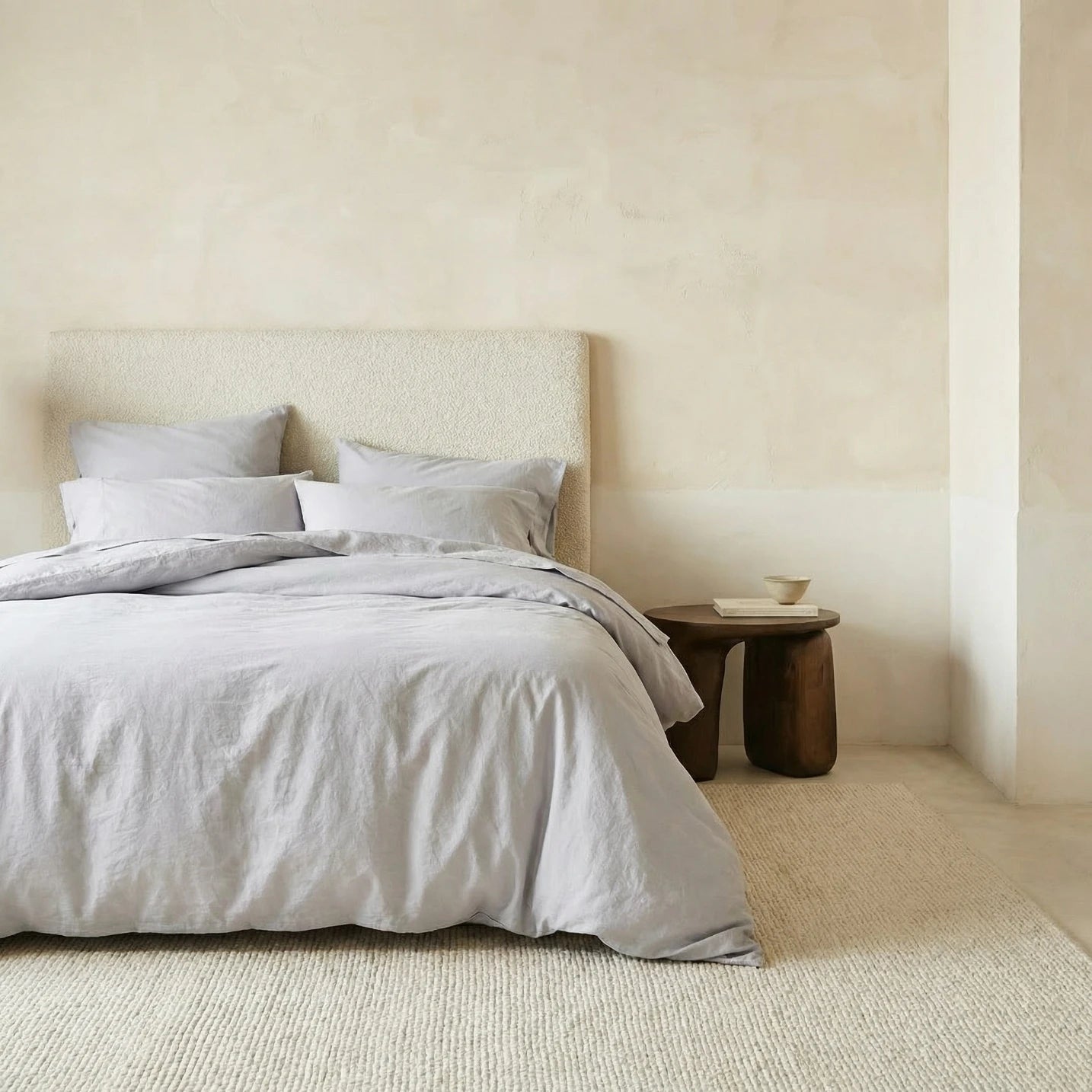
Not every "natural" fabric is good for dry skin. Some breathe well but absorb too much moisture; others are gentle but trap heat. Here is the honest comparison across the five candidates worth considering.
| Fabric | Moisture behavior | Friction | Verdict for dry/aging skin |
|---|---|---|---|
| Organic cotton percale | Balanced — breathes, doesn't aggressively wick | Low (when 300+ TC, washed) | ⭐ Best year-round sheet |
| Washed linen | Moisture-balancing — wicks excess sweat without dehydrating | Low (textured but soft when stonewashed) | ⭐ Best for warm climates / menopause |
| Mulberry silk | Holds skin moisture (low absorbency) | Lowest of any fabric (~43% less than cotton) | ⭐ Best pillowcase (full silk sheets are impractical) |
| Eucalyptus tencel (lyocell) | Excellent moisture management — wicks sweat without over-drying | Very low — silky-smooth hand | Strong silk alternative for the face |
| Bamboo viscose | Aggressive wicking — can over-dry | Low | ⚠️ Marketed as skin-friendly; chemically processed and worse than cotton for already-dry skin |
The clear answer: if you can only buy one fabric, organic cotton percale is the safest bet. If you have hot flashes or live in a humid climate, layer washed linen on top. For the face specifically, switch to a silk or tencel pillowcase regardless of what the rest of the bed is.
3. The Pillowcase Question — Why Silk Is the Single Biggest Skin Upgrade
If you read only one section of this guide, read this one. The pillowcase is the single highest-leverage piece of bedding for facial skin because it's in direct contact with the part of you that ages most visibly. Roughly half of nightly compression wrinkles form during side-sleeping, and friction from the pillowcase is the dominant factor in their progression.
Silk's value isn't comfort or luxury (though both are real). It's mechanical:
| Property | Mulberry silk | Cotton percale | Polyester / satin |
|---|---|---|---|
| Coefficient of friction (face) | ~0.16 (lowest) | ~0.28 | ~0.22 (slippery but generates static) |
| Moisture absorption | ~11% (low — preserves serums) | ~25% (absorbs serums) | ~0.5% (plastic — doesn't absorb but creates static) |
| Static generation | None | None | High — disrupts skin lipid film |
| Effect on hair | Reduces breakage, no frizz | Mild friction — some breakage | Slippery but builds static frizz |
| Care | Cool wash, hand or gentle, line-dry | Hot wash, tumble dry | Machine wash any temperature |
| Price (queen pillowcase) | $60–$130 | $25–$50 | $8–$25 |
What to look for when buying silk pillowcases:
- 22 momme is the standard luxury weight. Below 19 momme is too thin; above 25 is overkill.
- Mulberry silk is the only silk worth buying for skin. "Wild" silk has uneven fibre and more friction.
- OEKO-TEX certification matters — silk is often dyed with reactive dyes that can leach onto skin overnight.
- Hidden zipper closure is far better than envelope or button — buttons and ties create pressure points on the face.
- Eucalyptus tencel is a strong vegan-and-cheaper alternative — most of silk's friction benefit at half the price.
One caveat: silk pillowcases reduce friction wrinkles but they don't prevent the underlying compression of side-sleeping. If you want maximum prevention, sleeping on your back is still the highest-impact change. The silk pillowcase reduces the cost of side-sleeping; it doesn't eliminate it.
4. What to Avoid (and Why)
Marketing in the bedding industry is loose. "Wrinkle-free", "easy-care", "hotel quality", "anti-allergen", and "hypoallergenic" are all unregulated terms in the United States. Here is the list of materials and finishes to actively avoid if you have dry or aging skin:
| What to skip | Why |
|---|---|
| "Wrinkle-free" or "easy-care" sheets | Treated with formaldehyde-based DMDHEU resin — IARC-classified as a known carcinogen and a documented contact-dermatitis trigger |
| Polyester / poly-cotton blends | Generates static, traps heat, doesn't absorb moisture (so sweat sits on skin), sheds microplastics |
| Microfibre | Polyester subset — same problems plus shorter fibre means more abrasion against compromised skin |
| Bamboo viscose / "bamboo rayon" | Marketed as natural but produced via chemical-intensive viscose process; aggressively wicks moisture (bad for already-dry skin) |
| 1,000+ thread count sheets | Almost always achieved via multi-ply yarn counting; physically denser, traps heat, encourages sweating |
| Sateen pillowcases | Silky to the hand but trap heat against the face — for sheets sateen is fine, for the face it isn't |
| Synthetic satin (not silk) | Often confused with silk in marketing; polyester-based, generates static, no skin benefit despite slippery feel |
| Brightly-dyed sheets (deep colours, prints) | Reactive dyes leach onto skin overnight — sensitivity rises with age. Stick to white, undyed, or naturally-dyed |
| "Anti-stain" or "stain-resistant" finishes | Often PFAS-based — bioaccumulating "forever chemicals" with documented endocrine and skin effects |
For a deeper look at what's actually in conventional bedding, our guide to non-toxic bedding walks through every chemical class and how to spot them on labels.
5. The 3-Product Setup for Dry and Aging Skin
The complete setup is simpler than most skincare routines and runs about $250–$450 for a queen bed. Here are the three pieces, in order of impact-per-dollar:
| Priority | What to buy | Spec | Cost |
|---|---|---|---|
| 1 | Mulberry silk or eucalyptus tencel pillowcase (×2) | 22 momme silk OR tencel lyocell, OEKO-TEX certified, hidden zipper | $80–$240 / pair |
| 2 | Sheet set — organic cotton percale OR washed linen | 300 TC GOTS-certified percale OR stonewashed linen, undyed or naturally-dyed | $170–$280 |
| 3 | Bedroom humidifier | Cool-mist, 1–2 gallon capacity, target 40–60% relative humidity | $40–$120 |
The pillowcase is the highest-impact-per-dollar because the face is where you see ageing first and where direct contact happens for the most consecutive hours. The sheets matter more for dry skin on the body — particularly arms, legs, and back — and for the moisture-loss prevention that compounds over years. The humidifier addresses the environmental side of the problem: HVAC indoor air typically runs 20–30% relative humidity in winter, well below the 40–60% range skin needs.
If your budget is tighter, the order of upgrades is: silk/tencel pillowcase first, then the sheets, then the humidifier. Even a single $80 pillowcase upgrade is the highest-leverage skincare purchase under $100.
— Or & Zon —
Shop the Linen Collection
Stonewashed French flax · GOTS + Oeko-Tex 100 certified · made in Portugal · softens with every wash.
6. The Layered Approach for Severe Dry Skin or Eczema
For severely dry skin, eczema, or atopic dermatitis, single-fabric setups can fail because each fibre has different strengths. The "three fibre, three job" layered approach uses each fabric where it's best:
Bottom layer — organic cotton percale fitted sheet
Touches the body the most hours per night. Crisp matte weave, minimal friction, breathable, no chemical residue.
Top layer — washed linen flat sheet
Adds moisture-balancing breathability between you and the duvet. Helpful for hot flashes and overnight sweat.
Pillowcase — silk or tencel
For the face. Lowest friction, holds moisture, doesn't strip serums, hypoallergenic.
Duvet cover — organic cotton percale
Same fibre as fitted sheet for consistency. Avoid microfibre or "easy-care" duvet covers — they trap heat and contain finish chemicals.
Wash protocol — fragrance-free, no softener
Warm wash (not hot for silk), fragrance-free dye-free detergent. Skip fabric softener entirely — it leaves skin-irritating residue.
For our complete laundering protocol — temperatures by fabric, the white-vinegar trick, and what NOT to add — see our guide to washing bed sheets the hotel-standard way.
7. How to Wash Sheets When Skin Sensitivity Matters
Wash routine matters as much as the fabric for compromised or aging skin. Detergent residue, fabric softener coating, and overheated drying all degrade the skin-friendly properties of even the best fabric.
| Step | What to do | Why |
|---|---|---|
| Detergent | Fragrance-free, dye-free, plant-based | Standard detergent fragrances are top contact-dermatitis triggers |
| Fabric softener | Skip entirely — replace with 1/2 cup distilled white vinegar in the rinse | Softener coats fibres, traps allergens, and reduces breathability |
| Wash temperature — cotton sheets | Warm (40°C / 104°F) | Cleans well without weakening fibres or fading dye |
| Wash temperature — silk pillowcase | Cool (30°C / 86°F), gentle cycle, mesh bag | Silk shrinks and loses sheen above 40°C |
| Drying — cotton | Tumble low or line dry | High heat weakens fibres and creates microscopic abrasion edges |
| Drying — silk | Air dry flat, away from direct sunlight | Sun degrades silk's protein structure and fades natural lustre |
| Replacement frequency — pillowcases | 6–12 months | Sebum and product residue accumulate; fibres break down faster than sheets |
8. The Or & Zon Setup for Dry and Aging Skin
If you want the configuration we recommend most often to customers asking specifically about dry or mature skin:
- Sheet set: our 300 TC GOTS-certified organic cotton percale sheets in undyed cream or oatmeal — breathable, free of formaldehyde finishes, soft enough for compromised barriers, durable enough to last 8–10 years with proper laundering.
- Duvet cover: our organic cotton percale duvet cover matched to the sheet set — cuts down on the fibre variety irritated skin reacts to.
- Bundle: for the easiest one-decision approach, the bed bundles include sheets, duvet cover, and pillowcases in coordinated colour.
- Pillowcase note: if you can only upgrade one piece for skin reasons, use our cotton bundle as the base layer and add a separate mulberry silk or tencel pillowcase from a trusted skincare-focused brand. We don't yet sell silk because we won't compromise on certification standards on a category we haven't fully tested.
For a wider look at what makes any sheet truly skin-safe — formaldehyde testing, GOTS verification, OEKO-TEX standards — read our guide to the best organic percale sheets and our guide to sheets for sensitive skin.
9. Frequently Asked Questions
Are silk pillowcases really better for aging skin or is it marketing?
The friction-reduction effect is real and measurable — coefficient of friction is roughly 43% lower than cotton for the same skin contact. The wrinkle-prevention claim is more nuanced: silk reduces compression friction during side-sleeping, which slows the formation of permanent crease lines, but it does not reverse existing wrinkles or compensate for the underlying compression of side-sleeping. The hair, sebum-management, and serum-preservation benefits are all genuine.
What thread count is best for dry skin?
Avoid the thread-count obsession. The sweet spot for skin-friendly cotton is 300–400 TC percale. Above 600 TC, sheets retain heat (which dries skin further), and most "1,000 TC" claims are achieved through multi-ply yarn counting rather than true single-yarn density.
Is bamboo a good fabric for dry or aging skin?
Despite the marketing, bamboo viscose is one of the worst fabrics for already-dry skin. It wicks moisture aggressively (which over-dries) and is produced through a chemically-intensive viscose process. If you want the silky hand of bamboo without the drying effect, look at eucalyptus tencel (lyocell) instead.
Can I wash silk pillowcases in the washing machine?
Yes — most modern mulberry silk pillowcases are machine-washable on a cool delicate cycle inside a mesh bag with fragrance-free, dye-free detergent. Skip fabric softener and avoid bleach. Air dry flat, away from direct sunlight. Hand-washing is gentler but not strictly necessary.
How often should I replace pillowcases for skin reasons?
Every 6–12 months. Pillowcases accumulate sebum, dead skin cells, and skincare-product residue much faster than other bedding. Even with weekly washing, fibres break down faster against a face for 8 hours per night than against a body. If you have acne or compromised skin, replace every 6 months.
Do I really need a humidifier?
If you live in a climate with significant heating in winter or significant air-conditioning in summer, yes. HVAC dries indoor air to 20–30% relative humidity, while skin needs 40–60%. The difference compounds across thousands of nightly hours. A $50 cool-mist humidifier next to the bed is one of the highest-impact skincare tools sold.
Are organic cotton sheets actually softer than conventional cotton?
Out of the bag, they're often slightly stiffer because they haven't been treated with chemical softeners or wrinkle-resistance finishes. After 3–5 washes, GOTS-certified organic cotton softens dramatically and continues to soften with use over years. Conventional cotton with finishes feels softer initially but degrades faster.
Should I sleep on my back to prevent wrinkles?
Back-sleeping fully prevents compression and friction wrinkles on the face, but it isn't realistic for most people who naturally side-sleep. The realistic compromise is to sleep on your back when comfortable and use a silk or tencel pillowcase to reduce the impact when you do side-sleep. Specialty "anti-wrinkle" pillows that hold the head in a neutral position exist but most people find them uncomfortable.
Are linen sheets too rough for sensitive or aging skin?
Stonewashed linen — which has been mechanically softened during finishing — is one of the gentler fabrics on aging skin. New, unwashed linen can feel coarse, but quality stonewashed linen sheets feel similar to softened cotton from day one, with the added benefit of moisture-balancing and natural temperature regulation.
What if my partner has different skin needs?
Use different pillowcases on each side of the bed. Sheets are usually a compromise both sleepers can live with — organic cotton percale works for almost all skin types. The pillowcase is where individual differences matter most, and switching one side to silk or tencel costs about $80.
📚 Related Reading
Last updated: May 2026. We update this guide quarterly as dermatology research and textile certifications evolve. Spotted a stale figure? Email hello@orezon.co.
— Or & Zon —
Ready to upgrade to real linen?
Or & Zon's stonewashed French flax linen — GOTS + Oeko-Tex 100 certified, hand-finished in a 4-generation Portuguese mill. Sheets, duvet covers, pillowcases.


Comments